
2026 Best Women’s Shirt Styles for Global Buyers?

Time:2026-09-17 Author:Isabella
0%

The 2026 best women’s shirt styles will combine modern design, practical comfort, and reliable production. Global buyers are watching relaxed tailoring, refined oversized shirts, soft utility details, and versatile workwear silhouettes. A crisp pointed collar can strengthen a professional collection. A curved hem can create easier movement. Subtle gathers around the sleeve can add shape without increasing complexity.

Small details matter.

Experienced sourcing teams usually examine fabric weight, stitching quality, colorfastness, and shrinkage before confirming large orders. A lightweight cotton-poplin shirt may suit warm markets, while brushed flannel can support autumn and winter ranges. Recycled fibers and certified materials may improve a collection’s credibility, but claims should remain clear and verifiable. Buyers should also review size grading across regions, because a comfortable Shirt Woman silhouette in one market may feel restrictive elsewhere.

This guide explores the leading shirt directions expected in 2026, with attention to retail appeal and production reality. It considers classic button-downs, feminine blouses, cropped shapes, tunic shirts, and adaptable layering pieces. Product photographs can be persuasive, yet they cannot reveal every issue. A shirt may look perfect in a sample and twist after washing. Forecasting is never exact. Some predicted trends may fade quickly, while a simple white shirt may outperform them all. Reliable decisions come from comparing design, material performance, supplier capability, and customer needs together.
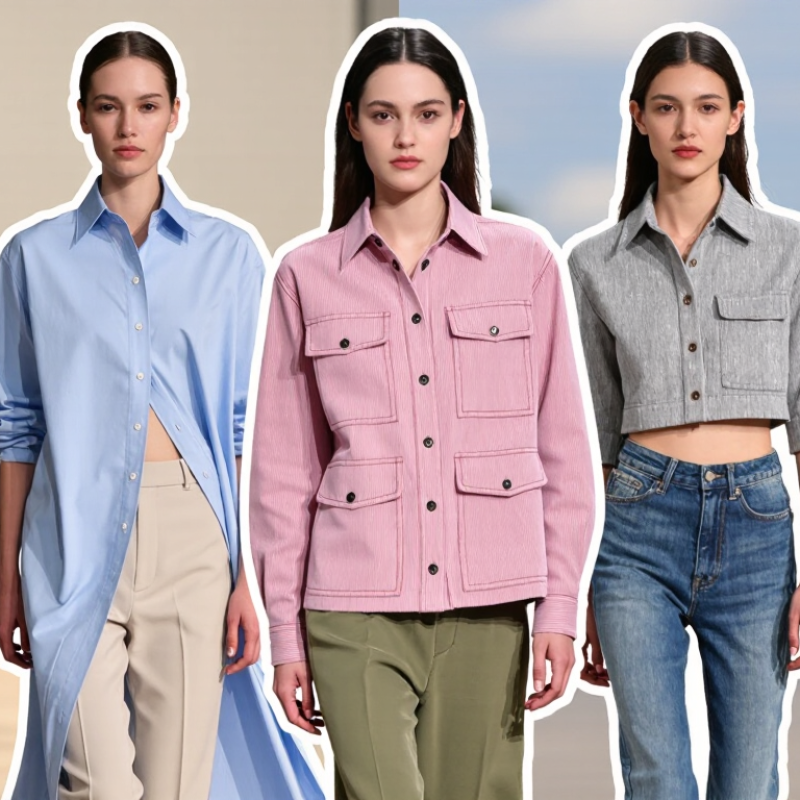
2026 Best Women’s Shirt Styles for Global Buyers?

Women’s Shirt Style Trends Shaping Global Markets in 2026

Women’s Shirt Style Trends Shaping Global Markets in 2026

Women’s shirt demand is moving toward practical elegance in 2026. McKinsey and The Business of Fashion’s State of Fashion 2025 report describes low-single-digit industry growth and stronger value pressure. Buyers are choosing shirts that work across offices, travel, and casual settings. Relaxed tailoring is expanding, with curved hems, wider cuffs, and breathable cotton blends. Crisp poplin remains important, but softer textures are gaining attention.

Color direction is becoming more selective. Industry color forecasts point to muted blue, clay, cream, and fresh green as commercial choices. These shades photograph well and support longer product cycles. According to Euromonitor’s 2025 apparel insights, consumers increasingly balance self-expression with durability and price. That balance is visible in convertible shirts, adjustable waists, and easy-care fabrics. Oversized shapes still sell, but excessive volume can create fit problems. This needs more testing.

Tips: Global buyers should request size-set samples before bulk orders. Check shrinkage after washing. Review sleeve width, button strength, and colorfastness under daylight. Ask suppliers for fiber composition and care-test records. Small details matter.

Digital retail data also favors clearer product information. Baymard Institute research shows that confusing product details can increase shopping friction and abandonment. Therefore, shirt listings should show front, back, cuff, and fabric close-ups. Fit notes must be specific, not decorative. A precise measurement chart may outperform another styled image. Suppliers should track return reasons by market and adjust patterns carefully. Regional preferences are real. One global fit rarely works perfectly.

Key Shirt Silhouettes and Design Features for Women

For 2026, women’s shirt collections are moving toward clear silhouettes and practical design details. Global buyers are watching how each shape performs across different body types and markets. The relaxed straight shirt remains commercially strong. Its dropped shoulder creates ease, while a curved hem adds movement without looking oversized. A clean front placket keeps the style suitable for work and travel. Still, excessive volume can appear careless. That weakness deserves attention.

The fitted waist shirt is also gaining interest. Strategic darts, shaped side seams, and a slightly longer back create definition without restricting movement. A soft camp collar gives a modern, open neckline, while a pointed collar feels more formal. Cropped boxy shirts work well with high-waisted trousers, but their short length may not suit every customer. Longline shirts offer better coverage. They need careful grading across sizes.

Design features should support comfort, not decoration alone. Buyers can examine sleeve width, button strength, seam alignment, and fabric recovery during sample reviews. Breathable cotton blends suit warm regions, while brushed fabrics add value in cooler markets. A useful detail is an adjustable cuff. Small, but practical. Color consistency also matters when orders cross multiple production batches. One assumption needs testing: a popular silhouette in one region may feel unfamiliar elsewhere. Fit trials with varied models remain more reliable than trend reports alone.

Fabrics, Colors, Patterns, and Finishes Buyers Should Evaluate

2026 Best Women’s Shirt Styles for Global Buyers: Fabrics, Colors, Patterns, and Finishes Buyers Should Evaluate

For 2026, buyers should examine relaxed poplin shirts, fluid blouses, and lightweight overshirts. Fabric choice affects comfort, cost, durability, and compliance documentation. Textile Exchange reports that global fiber production reached 124 million tonnes in 2023. Polyester represented about 57% of total output, while cotton accounted for roughly 19%. These figures make fiber traceability commercially important, not decorative. Recycled content can support a stronger material story, but buyers should request certification and transaction records. A recycled claim without evidence is weak.

Color directions need practical testing. Soft mineral blue, washed olive, warm white, and muted coral suit broad commercial ranges. Yet color performance may vary across cotton, viscose, and polyester. Ask mills for laboratory colorfastness results, especially after washing. Small checks, narrow stripes, and hand-drawn florals can add value without excessive fabric waste. Placement matters. A pattern that looks balanced on a sample may distort near the bust or sleeve seam. Buyers should also inspect matte peaching, enzyme washing, subtle crinkle effects, and low-impact finishing methods. Some finishes feel attractive but reduce breathability. That trade-off is easy to overlook.

Tips: Test at least three fabric weights before committing. Compare hand feel after washing, not only on the showroom table. Request shrinkage, pilling, colorfastness, and fiber-content reports. McKinsey and The Business of Fashion’s State of Fashion research continues to identify sustainability and supply-chain transparency as major industry pressures. Still, data does not replace judgment. A perfect-looking shirt can fail in real use. Sampling needs more honest rejection.

2026 Best Women’s Shirt Styles for Global Buyers: Fabrics, Colors, Patterns, and Finishes

Typical commercial fabric-weight ranges help buyers match shirt styles with climate, drape, opacity, and end use. Lightweight viscose challis and linen are suitable for relaxed summer shirts, while poplin and oxford provide more structure for office and uniform styles. Buyers should also evaluate colorfastness, shrinkage, print or stripe alignment, and finishes such as wrinkle resistance, peach finishing, and softening.

Values show typical fabric weight ranges in grams per square metre (g/m²); specifications vary by construction, yarn count, finishing, and supplier.

How to Match Shirt Styles with Regional Customer Preferences

2026 Best Women’s Shirt Styles for Global Buyers?

How to Match Shirt Styles with Regional Customer Preferences

Regional preference should guide the shirt, not merely decorate it. McKinsey and The Business of Fashion’s State of Fashion 2025 report found that 80% of fashion executives expect conditions to stay difficult or worsen. Buyers therefore need adaptable products with clear local value.

In Europe, crisp poplin shirts, relaxed tailoring, and muted colors suit office-to-weekend wardrobes.

In North America, oversized fits, soft flannel, and easy-care fabrics support casual dressing.

Gulf customers may prefer longer hems, opaque materials, and fuller sleeves.

East Asian markets often respond well to compact silhouettes, layered collars, and lighter fabrics.

Details matter. Cotton Incorporated’s 2024 Global Lifestyle Monitor identifies comfort and quality as major clothing priorities worldwide. That supports breathable cotton blends, reinforced buttons, and non-transparent white fabrics. However, regional sizing remains a common weakness. A medium in one market can feel restrictive elsewhere. My own buying reviews show that attractive samples often fail when sleeve length ignores local proportions. That mistake is expensive.

Tips: Build three fit blocks before bulk production. Test each block with local wearers. Offer color cards by climate and shopping occasion. Track returns by size, fabric, and region. These signals reveal more than online clicks. Keep assumptions flexible. Customer feedback may challenge your first plan.

Sourcing, Quality Standards, and Retail Selection Criteria

2026 Best Women’s Shirt Styles for Global Buyers?

Global buyers are choosing women’s shirts for comfort, repeat wear, and easy retail presentation. Relaxed button-downs, refined poplin shirts, fluid blouses, and lightweight overshirts remain practical choices. I have found that simple silhouettes often sell more steadily than dramatic seasonal designs. Buyers should compare fabric composition, shrinkage, colorfastness, and seam strength before confirming production.

Sourcing should begin with a clear technical sheet.

It should show measurements, tolerance limits, stitching details, label placement, and approved fabric references. Ask suppliers for fabric test reports and pre-production samples. Check sleeve balance, collar recovery, button security, and side-seam alignment. Small defects become expensive when thousands of pieces reach stores. They also damage buyer confidence.

Quality standards must match the target market and retail price. Inspect garments under strong, neutral lighting, not only in a showroom. Verify fiber content and care labels independently when possible. Packaging should protect folded shirts from moisture and crushing. Retail selection also depends on size coverage, color coordination, replenishment speed, and return risk. A useful range may include white, soft blue, muted earth tones, and one stronger seasonal shade. Avoid overloading the collection.

Quality standards must match the target market and retail price.

No checklist is perfect.

I once underestimated how different a fabric looked after washing. The sample passed visual review, yet its softness changed noticeably. That mistake reinforced the value of wash testing, buyer wear trials, and honest supplier communication. Reliability grows through repeated checks, not confident promises.

FAQS

Which women’s shirt styles are expected to perform well in 2026?

Relaxed button-downs, refined poplin shirts, fluid blouses, and lightweight overshirts remain practical choices. They move easily. These styles support office, travel, and casual wardrobes. Simple shapes may sell more steadily than dramatic designs.

Which colors are suitable for global shirt collections?

Muted blue, clay, cream, and fresh green offer flexible commercial options. These shades photograph clearly and support longer selling periods. Keep one stronger seasonal color. Too many colors can weaken inventory planning and store coordination.

How should buyers adapt shirt styles for different regions?

European customers may prefer crisp poplin, relaxed tailoring, and muted colors. North American shoppers often favor oversized fits, soft flannel, and easy-care fabrics. Gulf markets may need longer hems, opaque materials, and fuller sleeves. East Asian customers may respond to compact shapes, layered collars, and lighter fabrics.

Why are regional fit tests important?

A medium size can feel restrictive in another market. Sleeve length, shoulder width, and body proportions often vary by region. Build three fit blocks before bulk production. Test them with local wearers, not only internal staff.

What fabric qualities should buyers check before ordering?

Review fiber composition, shrinkage, colorfastness, breathability, and seam strength. Wash samples before approval. Check the fabric again. A shirt may look excellent before washing, then lose softness or shape afterward.

Which construction details deserve close inspection?

Inspect sleeve balance, collar recovery, button security, and side-seam alignment. Check wider cuffs and curved hems for consistent measurements. Reinforced buttons can reduce damage during repeated wear. Small defects become expensive across large orders.

What information should a supplier provide?

Request a technical sheet with measurements, tolerances, stitching details, label placement, and approved fabric references. Ask for pre-production samples and care-test records. Verify fiber content when possible. Confident promises are not enough.

How can online product listings reduce returns?

Show front, back, cuffs, collars, and fabric close-ups. Include precise measurements and clear fit notes. Mention fabric weight, transparency, stretch, and care instructions. One clear chart helps. Track return reasons by size, fabric, and region, then adjust patterns carefully.

Conclusion

In 2026, women’s shirt trends for global buyers will focus on versatile silhouettes, practical comfort, and refined design. Popular directions may include relaxed oversized shirts, tailored button-downs, cropped proportions, utility-inspired styles, soft blouses, and convertible designs that suit both casual and professional wardrobes. Buyers should evaluate fabric performance, including breathability, durability, drape, easy care, and seasonal suitability. Color palettes may balance timeless neutrals with fresh pastels, natural tones, and selected statement shades, while stripes, checks, subtle graphics, textured surfaces, embroidery, and clean finishing details add commercial appeal. The keyword Shirt Woman can also support product positioning and search visibility when describing women’s shirt collections.

Successful sourcing requires matching styles with regional preferences, climate, sizing expectations, cultural taste, and local retail habits. Global buyers should assess stitching quality, fabric consistency, colorfastness, shrinkage control, fit accuracy, packaging, lead times, and dependable production capacity. A strong retail selection should combine recognizable core products with carefully tested fashion updates, helping businesses serve different customer groups while maintaining quality, flexibility, and long-term market relevance.

Isabella

Isabella

Isabella is a dedicated marketing professional with a sharp focus on driving brand growth and engagement through strategic content creation. With an extensive background in digital marketing, she combines her passion for storytelling with her keen understanding of industry trends to deliver......