
A Long Sleeve T Shirt can serve as a soft base layer, a warm weekend staple, or a neat option for casual work. The right style depends on more than color. Fabric weight, fit, neckline, and sleeve cuffs all affect how a shirt feels through the day. A lightweight cotton tee may sit comfortably beneath a jacket, while a heavier knit can feel more substantial on a cool morning. Small details count. A ribbed cuff, for example, may help sleeves stay in place, but it can also feel snug on some wrists.
This guide explores ten types of long sleeve T shirts and the needs each one may suit. You’ll find options for layering, exercise, relaxed everyday wear, and outfits that call for a cleaner finish. Fit matters. A slim cut can reduce bulk under a sweater, while a relaxed shape allows more room for movement. Check the fabric label and care instructions, too; shrinkage and texture can vary between blends and brands. No single style works for everyone. Even a well-reviewed shirt may feel wrong if its seams rub or its sleeves fall short. It’s easy to focus on appearance and overlook comfort. Use these comparisons as a practical starting point, then consider your climate, routine, and preferred feel before choosing.
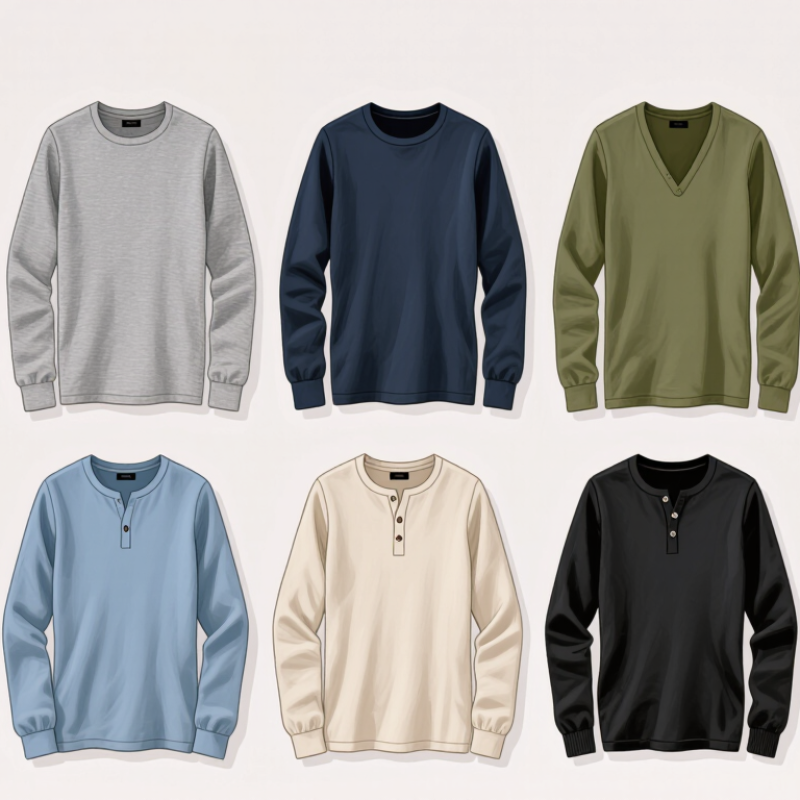
A long sleeve T-shirt is generally a knitted pullover with a T-shirt-style body and sleeves reaching toward the wrists. Its fabric is often jersey, which feels smooth on one side and slightly textured on the other. The neckline may be crew, V-shaped, or another simple opening. There is usually no full button placket. The boundary is not always tidy: some designs borrow details from sweatshirts or casual shirts.
Construction matters more than the name on a product page. A woven shirt has interlaced yarns; a T-shirt typically uses knitted loops, giving it more stretch. Check the fabric label and seams. Ribbed cuffs, shoulder seams, and a soft drape are useful clues, though none alone defines the garment. ASTM D3776 provides a standard method for measuring fabric mass per unit area, a useful specification when comparing lightweight and heavier knits.
Fiber choice also changes how a long sleeve T-shirt feels and performs. Textile Exchange’s Materials Market Report 2024 estimates that global fiber production reached 124 million tonnes in 2023, with polyester accounting for 57 percent. That industry-wide figure does not describe T-shirts specifically, but it shows why fiber content deserves attention. Cotton often feels familiar against skin; polyester may dry faster. Blends vary. Read the care label, and remember that fabric weight and finishing can matter as much as fiber type. A label never tells the whole story.
Fabric is the first clue to how a long-sleeve T-shirt will perform. Lightweight cotton jersey feels cool and drapes easily, making it comfortable indoors or on mild days. It may also show wrinkles and wear sooner than a denser knit. Soft, but not always sturdy. A cotton blend can dry faster and resist shrinking, though the exact result depends on the fiber mix and care instructions.
Construction creates more distinctions. Waffle-knit fabric traps small pockets of air, so it can feel warmer without a heavy outer layer. Raglan sleeves, with seams running from the collar toward the underarm, allow freer shoulder movement than a standard set-in sleeve. That difference matters when reaching, layering, or carrying a bag. Ribbed cuffs help sleeves stay in place, while flat, even stitching can reduce irritation where seams meet the skin. Small details count.
A shirt can feel perfect in a fitting room and become clingy after a few hours. Fit, fabric weight, and personal comfort all play a part, and none can be judged by the label alone. Check the collar’s recovery, sleeve length, and seam finish. Wash behavior matters, too. Even sturdy fabric can twist if it is poorly made or handled roughly. A little trial and error is normal.
| Type | Typical Fabric & Construction | Typical Fabric Weight | Best For | Key Consideration |
|---|---|---|---|---|
| 1. Classic Cotton Jersey | Usually single-knit cotton jersey with a smooth face and a naturally softer, slightly textured back. May be made from combed or ring-spun cotton. | About 140–190 g/m² | Everyday wear, layering, and mild-weather comfort. | Breathable and familiar, but cotton can absorb moisture and may take longer to dry than many synthetic fabrics. Follow the care label to limit shrinkage. |
| 2. Heavyweight Jersey | Dense, thicker jersey, often made from cotton or a cotton-rich blend; typically has a more substantial hand feel. | About 200–280 g/m² | Cooler weather, workwear-inspired outfits, or a more structured look. | Provides more coverage and body, but can feel warmer and heavier than standard jersey. |
| 3. Thermal Waffle Knit | Waffle or honeycomb knit with a raised grid texture that creates small air pockets; commonly cotton or a cotton blend. | About 180–300 g/m² | Cold-weather layering and casual wear. | The textured surface adds warmth and visual depth. It may snag more readily than a smooth jersey, so check the garment’s care instructions. |
| 4. Rib-Knit Long Sleeve | Ribbed knit with alternating raised and recessed columns; often includes elastane or spandex for added stretch and recovery. | About 180–300 g/m² | Close-fitting layers, flexible movement, and a body-skimming silhouette. | Rib construction stretches easily, but fit depends on the garment’s fiber blend and recovery. The rib texture can make the shirt feel warmer than a lightweight jersey. |
| 5. Performance Moisture-Wicking | Typically polyester or a polyester blend, often using lightweight knit construction designed to move moisture across the fabric surface. | About 120–200 g/m² | Training, hiking, and active use where quick drying is useful. | Usually dries faster than cotton, but performance varies by fabric construction and finish. Wash as directed to help manage odor and preserve the fabric. |
| 6. Sun-Protective Long Sleeve | Often a tightly constructed polyester, nylon, or blended knit. Some garments are independently rated and labeled with a UPF value. | About 120–220 g/m² | Outdoor activities when added clothing coverage is desired. | Look for a stated UPF rating if verified ultraviolet protection matters; a long sleeve or dark color alone does not establish a specific protection level. |
| 7. Merino Wool | Fine merino wool, sometimes blended with nylon or elastane for durability and stretch; can be knitted as a lightweight jersey. | About 150–220 g/m² | Travel, hiking, and layering across changing temperatures. | Merino can help regulate warmth and manage moisture, but it is generally more delicate than many cotton or synthetic shirts. Check the care label before washing. |
| 8. Cotton-Modal Blend | Cotton blended with modal, a regenerated cellulosic fiber, usually in a soft jersey knit; some versions also include elastane. | About 150–220 g/m² | Soft everyday wear and a smooth, fluid drape. | Often feels smooth and drapes more fluidly than sturdy cotton jersey. Fiber proportions and finishing affect durability, feel, and care needs. |
| 9. Henley | A neckline construction rather than a specific fabric type: usually a crew or shallow round neckline with a short button placket, in jersey or rib knit. | About 160–260 g/m² | Casual outfits when a simple neckline detail is preferred. | Fabric performance depends on the knit and fiber content. The placket adds structure and may need gentle handling during laundering. |
| 10. Raglan-Sleeve | A sleeve construction in which the sleeve seam extends diagonally toward the neckline; commonly made in jersey, cotton blends, or performance knits. | About 140–240 g/m² | Casual styling and a shoulder seam design that allows a different range of arm movement. | Raglan describes the pattern, not the fabric. Comfort, warmth, and stretch depend on the material and knit used. |
Note: Fabric weights are approximate common ranges, not fixed standards. Actual weight, warmth, stretch, and care requirements vary by fiber blend, knit structure, finishing, and garment design.
Long-sleeve T-shirts vary in neckline, construction, and purpose. The classic crewneck has a rounded collar and works easily under a jacket. A V-neck opens the neckline, though a deep cut may show beneath a shirt. Henley styles add a short button placket, while raglan sleeves run diagonally toward the collar and allow easier shoulder movement. A pocket tee keeps a small chest pocket for practical detail. Simple, but useful.
Thermal or waffle-knit shirts have a textured surface that traps more warmth than a lightweight jersey tee. Mock-neck styles sit higher on the neck without folding over; turtlenecks provide more coverage and can feel warm indoors. Oversized long-sleeve tees offer room through the body, but sleeves that cover the hands can get in the way. Performance versions often use moisture-managing fabrics for exercise or travel. Check the care label, since heat can affect some synthetic fibers.
These categories can overlap: a raglan shirt might also be oversized or made from thermal fabric. Fit matters as much as the label. Raise your arms, bend your elbows, and check that the cuffs stay near the wrists. A soft fabric may feel best at first, yet lose shape after frequent washing. Not every detail is predictable.
The right long sleeve T-shirt depends on what you need it to do. For everyday wear, a midweight cotton shirt feels soft and works with jeans or under a jacket. If you run or commute actively, choose a lightweight moisture-wicking fabric that dries quickly. Check the seams and cuffs; rough stitching can irritate skin during repeated movement. Small details matter.
For cool mornings, a thermal or brushed-fabric shirt adds warmth without the bulk of a sweater. A heavyweight cotton tee suits layering and holds its shape well, though it may feel too warm indoors. Need coverage in bright weather? Look for a shirt with a stated ultraviolet protection rating, and remember that fabric stretch and wear can affect coverage. A relaxed fit allows airflow, while a closer cut layers neatly beneath work clothes. Fit matters, too.
For casual dinners or travel, a long sleeve Henley offers a slightly dressier neckline than a crew neck. A basic crew neck is easier to layer and usually suits more outfits. Try moving your arms before buying: sleeves that ride up can become annoying fast. Fabric labels help, but they cannot tell you how a shirt will feel after a long day. That part takes trial and, occasionally, a return.
Which long-sleeve T-shirt suits each need? Compare each style’s editorial match for its most common use.
Scores are editorial recommendations on a 1–5 scale, not measured product ratings. Fabric, fit, and performance vary by garment.
Choosing the right long-sleeve T-shirt starts with the conditions it must handle. For daily wear, a cotton or cotton-blend jersey feels soft against skin and works well under a jacket. For running or humid shifts, look for lightweight fabric that dries quickly; a damp, clingy sleeve can become uncomfortable fast. Check the care label, too. “Moisture-wicking” alone does not tell you how a fabric performs after repeated washing.
For outdoor work, examine fabric coverage, weave, and tested ultraviolet protection, not just color. ASTM D6603’s UPF labeling guidance uses ratings from 15 to 50+, with higher numbers indicating greater protection from UV transmission. A UPF 40 shirt is a more informed choice for long sunny shifts than an untested fashion tee, though shade and sunscreen still matter. For layering in cold weather, prioritize a close but non-restrictive fit; tight cuffs can bunch beneath gloves. Fit matters. I would also be cautious about assuming thicker fabric always means better protection or warmth: fiber, construction, sweat, and wear all change how a shirt feels in real use.
It feels cool and drapes easily indoors or on mild days. It may wrinkle and wear sooner. Soft, not always sturdy.
Its textured surface traps small pockets of air. That can add warmth without a heavy outer layer.
Raglan seams run from the collar toward the underarm, allowing freer shoulder movement. Try reaching or carrying a bag to feel the difference.
Raise your arms and bend your elbows. Check the sleeve length, collar recovery, seam finish, and whether cuffs stay near your wrists.
A crewneck has a rounded collar and layers easily under a jacket. A deep V-neck may show beneath another shirt.
A Henley has a short button placket. A pocket tee has a small chest pocket. Simple, but useful.
No. Oversized describes the roomier fit, while thermal usually refers to textured fabric that holds more warmth. Categories can overlap.
Check the care label. Some blends dry faster and resist shrinking, while heat can affect certain synthetic fibers.
Yes. Frequent washing may change its shape, and rough handling can twist even sturdy fabric. I may trust softness too much at first.
A Long Sleeve T Shirt is a versatile garment defined by its full-length sleeves, simple shirt-style design, and range of fits and fabrics. Its comfort, warmth, durability, and appearance depend on details such as fiber choice, fabric weight, knit, seams, and construction. These features shape the many types available, from lightweight everyday basics and fitted styles to thermal, performance, and heavier options for cooler weather or outdoor use.
Choosing the right type starts with how and where you plan to wear it. Consider the season, activity, desired level of warmth, fit, and how much stretch or breathability you need. A soft, lightweight shirt may suit daily wear, while a more insulating or moisture-managing option can work better for active use. By matching fabric and construction to your needs, you can find a long-sleeved shirt that feels comfortable, functions well, and fits your personal style.